
Does Going to a Private School Really Improve Your AFL Draft Chances?
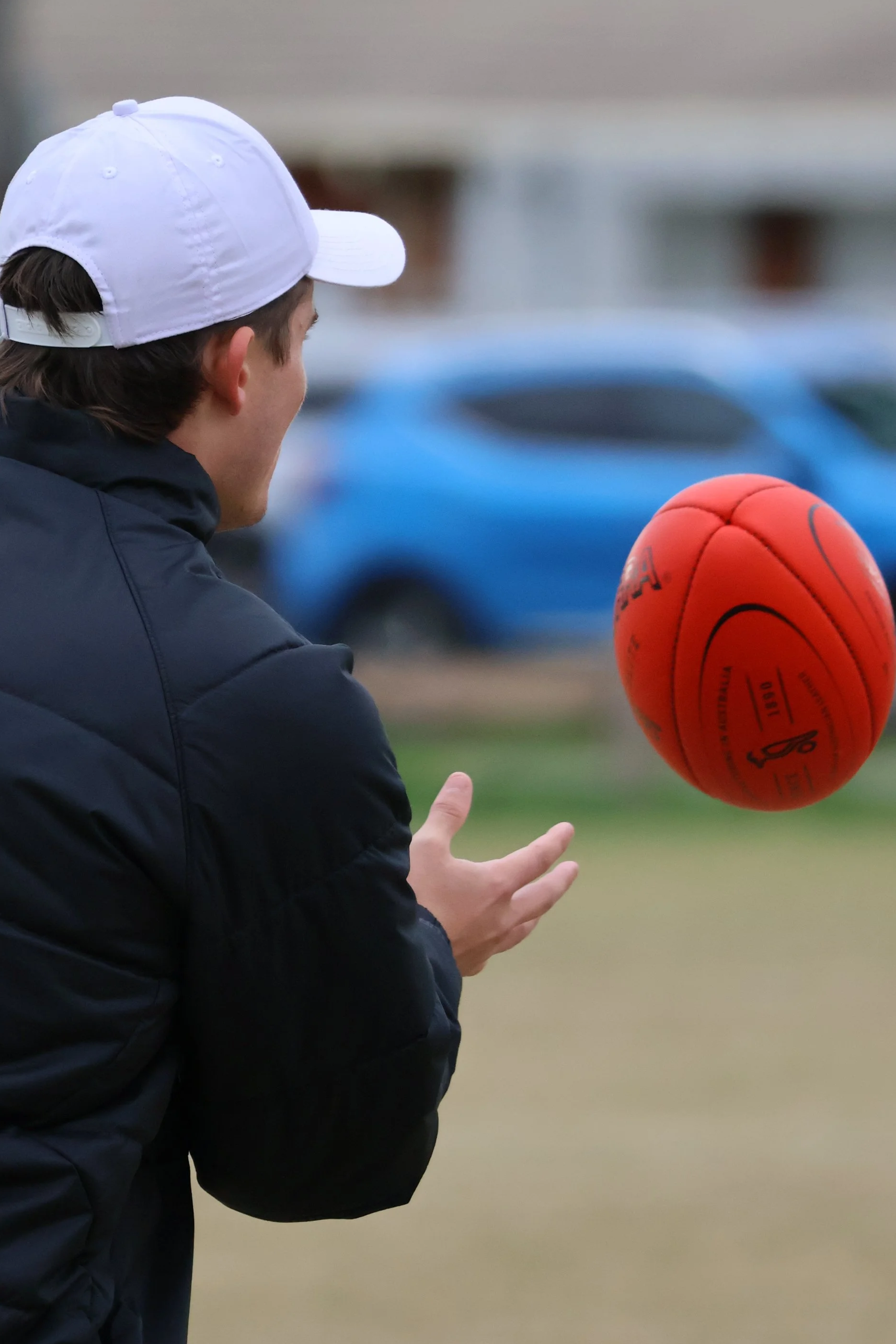
We often get the question from passionate clients and their parents… should we enrol in a private school to enhance their AFL skill development and improve our child’s chance of getting drafted?
The short answer we provide, not necessarily.
It’s just not that simple. At HAD, the guidance that we provide to our clients and their parents is that the real focus when choosing a school should be whether that school offers the programs, support, academic offerings, and facilities that best match what their child needs.
Selecting the right school for your child
Every child learns differently, so a one-size-fits-all approach to selecting a school doesn’t work. Instead, choosing a school that supports their child’s growth, confidence, and long-term development as a young athlete should be the ultimate priority. It’s rarely helpful to prioritise a school based only on perceived prestige or the strength of its AFL program.
While draft data shows more talent emerging from private schools, this trend also aligns with an increase in football scholarships. Many students are offered places based on their potential, yet that doesn’t mean they wouldn’t reach the same level of AFL skill development if they stayed at their original school and progressed through their talent pathway.
We work with players who have remained at their school, declined scholarships, and still been drafted. There is a perception that private-school players are seen more often by recruiters, but this generalisation doesn’t reflect how young athletes are assessed in the broader talent system.
It also overlooks some important points:
Elite environments recruit elite players.
Students who are committed to reaching the AFL or AFLW want to be in an environment that mirrors the standards of an elite club. Schools know this, and many are investing significantly in facilities, equipment, resources, and experienced coaching staff to provide the exact environments young athletes need to develop.
The APS is arguably the most well-known school football competition, a rich and long sporting history with high-profile AFL and AFLW talent coaching their programs. These schools have invested heavily in developing their programs and facilities, often using their big-name coaches and alumni as recruiting tools. But this isn’t unique to private schools. Many public schools are also building strong AFL academies led by current and former AFL and AFLW players, giving students genuine choice.
This means families can make decisions based on what truly matters: the overall environment a school offers, not just the size or reputation of its football program.
A HAD case study: Xavier Taylor
Take HAD’s own Xavier Taylor as an example, the #11 draft pick to Melbourne FC attended Rowville Secondary College and, irrespective of his football talents, did not consider looking elsewhere to complete his academics.
Xav was part of Rowville’s AFL Program; a well-established football academy developed by staff with Coates Talent League (CTL) and AFL experience and launched in partnership with his CTL club, the Eastern Ranges[1]. Xav had access to what he needed to develop his football and complete his academic studies:
· A supportive school environment with the football facilities he needed to work on his development
· A supportive social network
· A clear development plan through HAD
· Consistent game time with the Eastern Ranges in the Coates Talent League
Xav was drafted because he has consistently backed himself in and kept working towards his dream. He stood out each week playing for Eastern and drew even more attention from recruiters when his APS teammates were playing school footy; and now, he is a professional footballer with Melbourne Football Club #11 pick in the 2025 draft[2].
[1] https://www.rowvillesc.vic.edu.au/rowville-sports-academy/afl/
[2] https://www.afl.com.au/draft/draft-tracker/2025
HAD, creating the right environments for AFL skill development
At HAD, we help build elite environments around our clients. With access to personalised development plans, diet advice and plans, strength and conditioning programming, rehabilitation counselling, and wellbeing management, we work to ensure that they are given all the tools they need to excel, whether they are within the APS System, a Talent Pathway, or working their way through local football programs.
If this is something you’re interested in being a part of, register your interest here before we lock in our attendees at our 2026 client exclusive camp.
The APS and AFL Memorandum of Understanding (MOU) has its pros and cons
The MOU established between the APS and AFL states that during the APS Season, players who are listed on a CTL Squad and an APS Squad, must prioritise their APS commitments.
As a result, CTL programs only see their APS-listed players for one training session per week and cannot play them unless they are not selected for their APS match that week[1].
This means students who are part of both an APS and CTL squad end up playing significantly fewer CTL games, and introduces a few challenges when managing load and list decisions:
1. Risk of overload: If players are not consistently communicating and coordinating with the S&C staff and coaches from both programs, they can unintentionally overload themselves with combined APS and CTL training and games demands. This significantly increases the risk of injury, particularly stress fractures (common to growing young athletes) which can sideline a player for months at a time.
2. List decisions in Talent Pathways are challenging, and as we highlighted in September’s Blog Post, there are numerous on and off field factors that impact selection… one of which is player availability. If two equally talented footballers are being considered for selection, and one is guaranteed to miss up to half the season, whilst the other isn’t, we’ve noticed some Talent Pathway clubs selecting the more available player.
However, these challenges introduce significant opportunities for players who may have been on the cusp of selection and who are playing some high-quality football either at their local club or their school.
[1] https://www.smh.com.au/sport/no-peace-in-our-time-between-afl-and-schools-20100525-wb3k.html
A HAD case study: Sullivan Robey
While a large number of Eastern Ranges players missed CTL games to play for their APS schools, Robey earned a call-up to debut in Round 12 after putting together a string of outstanding senior performances with Rowville FC.
His CTL pathway was anything but straightforward: he was cut by the Dandenong Stingrays and missed selection at Eastern Ranges at the start of 2025. But he kept working, seized his opportunity, and has now been drafted with Pick #9 to Essendon FC.
The Mazenod College alumnus achieved his dream without attending an APS school and despite early setbacks in CTL selection. Mazenod’s High Performance Programs Coach, Blair Beatty—who also serves as the Eastern Ranges’ Head of High Performance—further highlights how non-APS schools are investing in and developing high-performance environments.
HAD, supporting young athletes
At HAD, we work with our clients and their clubs (whether that be school, local or CTL) to guide and educate them on the importance of managing their workload while balancing school and football commitments. We also consistently emphasise that there’s no single path to being drafted; every player’s journey is unique, and that’s what makes it so special.
Recruiters go where the talent is
The appeal of choosing a school with strong football resources is understandable, but the reality is simple: if a player is good enough, they will progress, regardless of the school they attend. AFL skill development is shaped by many influences, not just a school’s program.
School choice is never one-size-fits-all. Selecting a school purely for its AFL program can be counterproductive if the wider environment doesn’t support the student’s confidence, learning, or wellbeing. These factors play a major role in young athlete development and can influence long-term performance.
Draft outcomes are driven by far more than the prestige of a school or club. Schools that prioritise education, character, confidence, and responsibility often help nurture the traits recruiters value alongside football ability.
These qualities exist in both public and private settings. When recruiters speak with players, they are evaluating the whole person, not just their school or on-field results. What matters most is whether the school provides an environment where the student can grow academically, socially, and athletically in the classroom, at lunchtime, or out on the field.
The decision to go private impacts more than one child
It’s also important to consider the significant financial investment required by many private schools. Families need to think carefully about whether this cost is truly feasible, or if it may place unnecessary strain on the household.
Logistics should also be thought of - the travel to and from certain schools can make it harder for a young athlete to attend CTL or equivalent training sessions on time. Over time, this reduced availability can influence team selection when compared to a player who is more consistently present.
Children can feel, hear, and see the pressure these decisions create, and it can affect their emotional and mental wellbeing - which often shows up not only in their performance on the field, but more importantly, in the classroom.
If the goal is for a child to play First XVIII football, but achieving that comes at the expense of the emotional wellbeing of you, your partner, or any of your children, it’s worth reassessing whether the pros genuinely outweigh the cons.
Supporting your child’s path to the AFL/AFLW
Without knowing your child, personal circumstances, and reasons for choosing one school over another, we can’t tell you what’s best. It would be irresponsible for us to do so.
At HAD, we support our clients in making informed decisions about their football pathways; helping them navigate challenges, manage their workload, and celebrate the highs of their football journey, while focusing on developing both as players and as people.
If you would like to talk to us about our programming, or get some advice on which school your young footballer will benefit from, reach out to us HERE.