
Draft Ready | Part 2: What AFL + AFLW Recruiters Are Really Looking For.
When you’re surrounded by talented footballers, whether that be in your local team, or within a talent pathway, you need to find a way to stand out.
It may seem logical and efficient to adapt your training to align with the specific areas that recruiters are looking for - but there’s a lot to consider before you do…
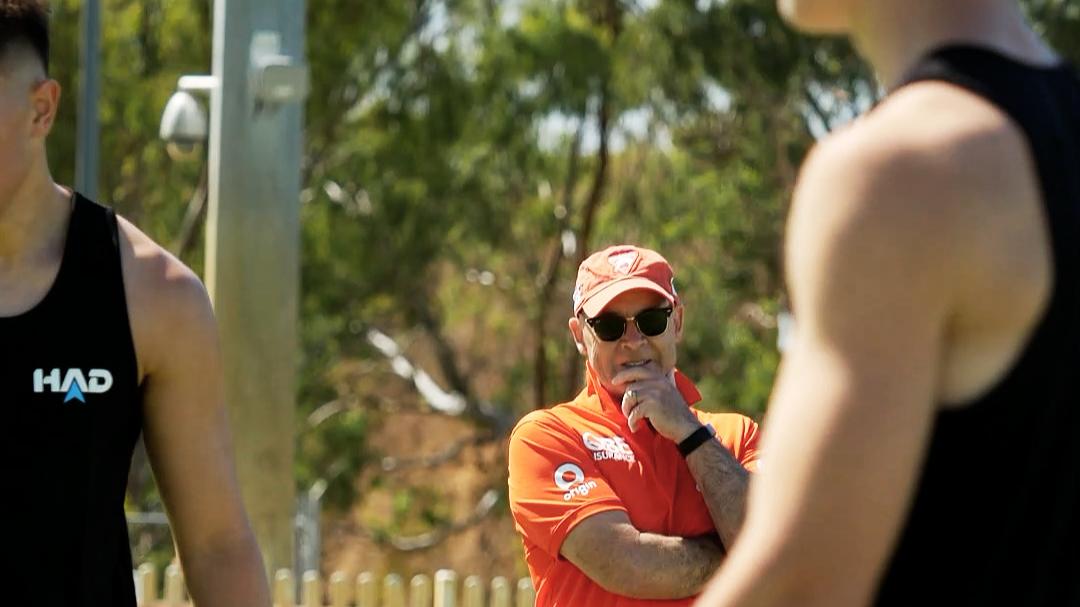
Unfortunately, identifying exactly what recruiters want and need for one team versus the next is complicated.
It’s dependent on the team’s needs, role requirements within, the coaches game plan, and the recruiter’s tacit knowledge (i.e. their skills, insights, ideas, and perspectives developed through years of experience that becomes implicit and forms their recruiting philosophy) [1] – and whilst it’s obvious that having elite fundamentals, and a good engine can get you far, it still may not get you to the elite level.
So, what else should you be aware of?
We’ve reviewed the literature and collated our experience working with recruiters to put together this guide for you.
1. Understanding the role of a Recruiter.
The role of a recruiter is not easy; they are tasked with understanding and developing a holistic view of a footballer, possibly at a young age, and based off this perspective making the important decision on their potential ability [2].
“I always believe that the first thing you have to identify is are they good enough? Can you see them making it in the AFL? Whether it's superstar or whether it's role player, do they have the tools that you can see them forging a career? If they hit that baseline, then they're on a [watch] list” - Recruiter 6 [2]
2 . The process of identifying + investigating talent.
Identifying Talent.
Whilst there are a few elite footballers that track ‘under the radar’ for recruiters, in general, a prospective player is scouted consistently over a two-three year period; for players who make the under-16 national championships, this is often the start of their scouting process [1].
Although some recruiters have acknowledged that players could be monitored earlier in their development, it is generally accepted that it is not the best use of their finite resources.
"The under-16 national championships is the first main competition where you just see the best (players compete against each other). It is our first real look at a lot of the talent." [1]
Generally, prior to National Champs, recruiters develop a talent board, which includes the names of players participating. From here, they are continuously monitored throughout their bottom age year, and the list is refined as these players transition through to their top age year – where, understandably, more scrutiny and attention is applied to each potential recruit [2].
This scouting process includes watching up to ~20 live games with follow up observation via video footage. The reason for viewing this footage is to confirm some of the recruiters’ perceptions from the game or identify some aspects they may have missed while watching the game in person [2].
“I quite like the vision, because it doesn't lie, so what you see is always the truth. But then there's things that it doesn't tell you because there's things that are happening off the ball, and that's why the live stuff's important” - Recruiter 5 [2]
Investigating Talent.
On top of watching match footage, recruiters are coding game actions and having regular conversations about the player with their recruiting team, list managers, and coaching staff.
A collaborative approach to recruiting is highly valuable, and these discussions play an important role in the decision-making process [2].
“The watch list is something that every week we would get together and update and say, ‘Okay, I saw this guy on the weekend, he's a no, so you knock him off, but this guy did something, let's add him back on.’ It'd just be a rolling watch list as the year went along” - Recruiter 9 [2]
All the collaboration, data, and vision is combined with home interviews, psychological profiles, medicals, background and character reference checks to build out an ever-evolving profile of the player.
“"We have a database of player strengths and weaknesses, then start to crunch the list and identify players.” [1]
The database and “watch list” are consistently updated and cross-referenced, with discrepancies identified and investigated. This process ensures the fine-tuning and calibration of the talent identification system and practices, to inform the decision-making process [1].
Therefore, over the course of the player’s development (not just one game, or a single year), there is a range of reports and data on their performance to build their athlete profile [2].
“As the year goes on, you just assess their talents and their performances, and all that kind of stuff in different grades and national championships. Their testing data, their GPS, their statistics and just try to pull all that information together, and then come up with a bit of a list of who you liked, and your board in terms of one to 50, just in pure rankings, and then also by position” – Recruiter 7 [2]
___________
So, why is it important to be aware of the recruiters’ process in identifying + investigating talent?
Well, it should reassure young footballers that no single game (whether you play incredibly, or below your usual standard), nor a single recruiter’s opinion will impact your draftability.
What is important is demonstrating consistency and on field improvement over several years; this will be seen by recruiters and make you more desirable.
We've seen this play out first-hand…
CASE STUDY: Shaun Mannagh
Shaun Mannagh first connected with HAD while on Richmond's VFL list, and even then, there was something about him. An X-factor that was impossible to ignore.
What followed on were stints at Lavington in the Ovens & Murray League and then Werribee in the VFL, year after year of performing without the phone call wanted most. Eventually, after a standout 2023 VFL season that culminated in a best-on-ground performance in the Grand Final, Geelong selected him at pick 36, making his AFL debut at 26 years of age.
The rest is well documented. Mannagh was awarded the AFL Coaches Association's Best Young Player Award (at the age of 28, in just his second AFL season), a fitting recognition for a player who never stopped improving when the spotlight wasn't on him.
Last year, Shaun came back to present at one of our camps and share his story with our long term clients who aspire reach the standards that he has. The message he delivered was the same one recruiters quietly look for across years of observation: the players who make it don’t have to be the most talented in the room, they're the ones who keep showing up, keep improving, and keep believing in themselves and their capabilities even if they’re not yet at the level they want to be.
That's not a coincidence. That's exactly what a recruiter's watch list rewards.
___________
If you need guidance in forming a development plan so you are able to consistently improve your on-field performance, reach out to us and we can set you up with a personalised strength and conditioning plan, a skill assessment and an individual coach who can provide guidance specific to your goals and position requirements.
Learn more about us:
Discover the stories of some of our HAD Clients and Parents.
Learn what sets us apart from other athlete development programs.
Keep learning via our Free Guides for Players + Parents.
The DRAFT READY Series
This guide has been part of our DRAFT READY series aiming to support players and parents on their footy journey through free insights based on literature and our collective experience in the industry.
Did you miss out on Part 1 of our Draft Ready Series? Keep growing your footy knowledge and read it here.
Continue reading Part 3 here.
References:
P. Larkin, D. Marchant, A. Syder and D. Farrow, “An eye for talent: The recruiters’ role in the Australian Football talent pathway,” PLoS ONE, vol. 15, no. 11, p. e0241307, 2020.
P. Larkin, N. Bonney, J. Dugdale, A. Kittel and M. J. Reeves, “Exploring talent identification in Australian Rules,” Journal of Expertise, vol. 5, no. 4, pp. 169-183, 2022.